Designed for practice.
Shaped by Earth.

Two materials

A surface and a foundation.

Natural cork surface

The side you meet

Natural rubber base

The side that holds the floor

Purely Earth.
Purposefully Designed.

Scroll
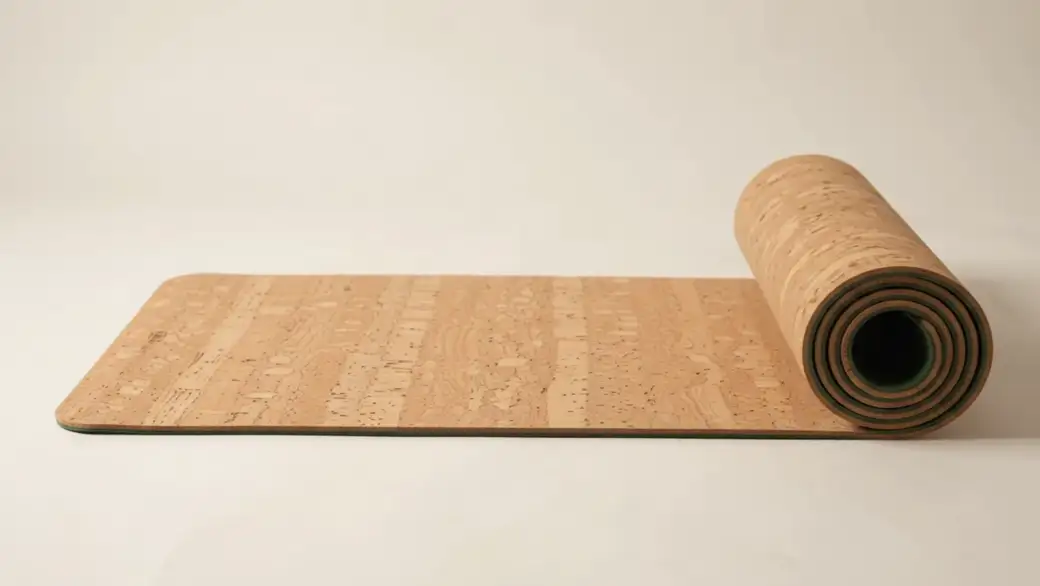
ProMat unrolled, showing the natural cork surface and the natural rubber edge

Why Sutra Earth exists

Created from practice,
not procurement.

Sutra Earth begins by observing the practice and identifying a genuine practitioner need. It does not begin by selecting an existing catalogue product and applying a label to it. That order of operations is the whole company. Practice first. Manufacturing second.

Sutrathread

A thread, a principle, a connecting idea. For us, the connection between practice, body, product design and conscious choices.

Earthgrounding

Our grounding in natural materials, in responsibility, and in the physical practice of yoga itself.

Together, a thoughtful connection between practice, performance and the earth.
The first expression

ProMat

A cork and natural rubber mat, developed around practitioner requirements rather than around what was already available to buy.

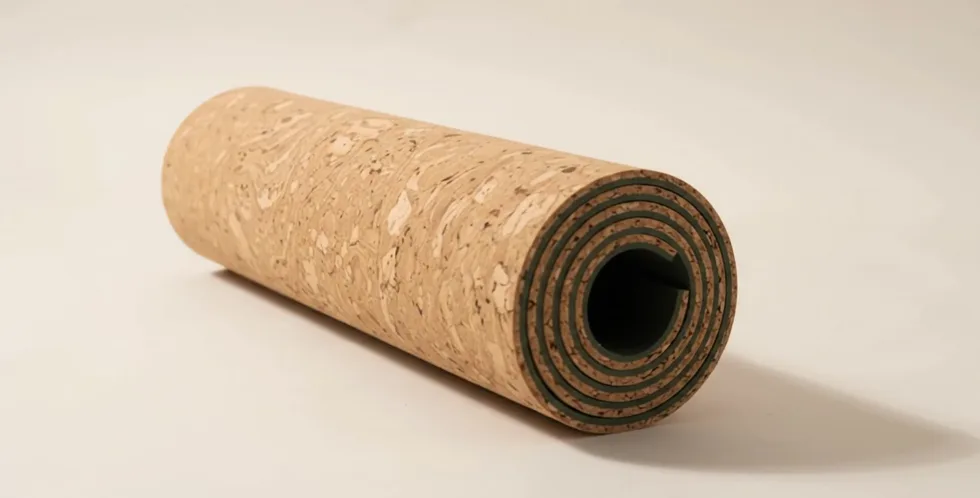
ProMat rolled, the cut end showing the cork surface wound over the natural rubber base
1830 mm680 mmSection5.5 mmNatural cork surfaceNatural rubber baseOverall thickness to specification. Layer proportions indicative.

Currently in prototype development and performance validation.

Why this thickness

5.5mm

Not thicker for the sake of being thicker.

Thickness is a trade. More cushioning costs stability. More stability costs comfort. 5.5 mm is where we chose to sit between the three.

01

Cushioning

Enough support under knees, wrists and seated bones that the floor does not dictate how long you can stay in a posture.

02

Stability

Thin enough that standing and balancing postures are not fighting a soft surface underfoot.

03

Floor feedback

You should still be able to feel the ground you are working against. That sense of contact is part of the practice.

Stated as design intent. Performance will be described only once validation is complete.

The materials

Two materials, each chosen for a reason.

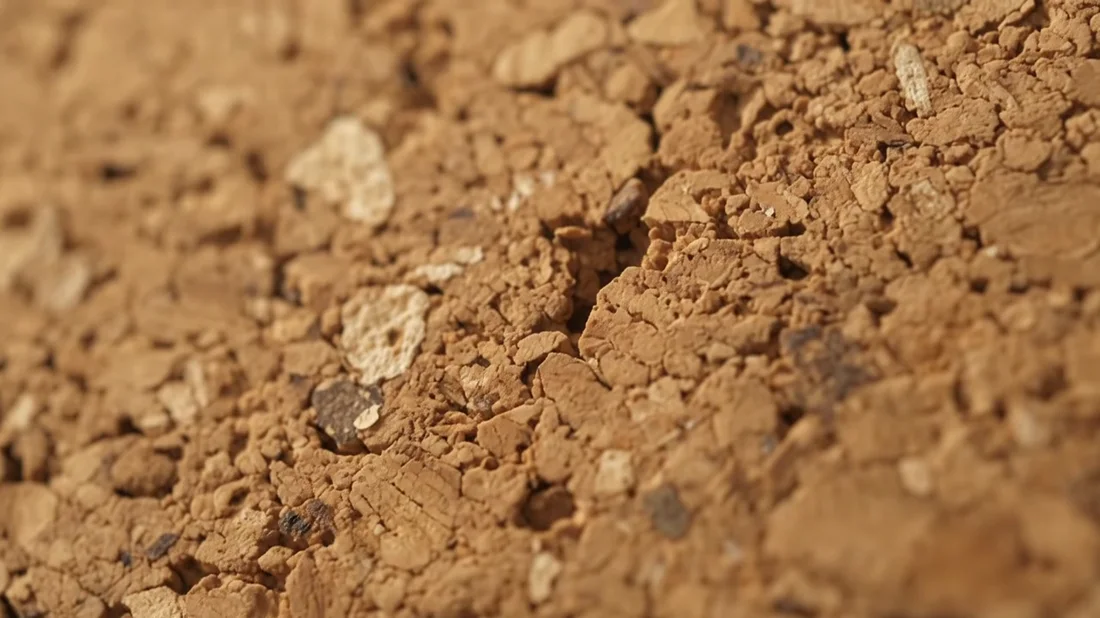
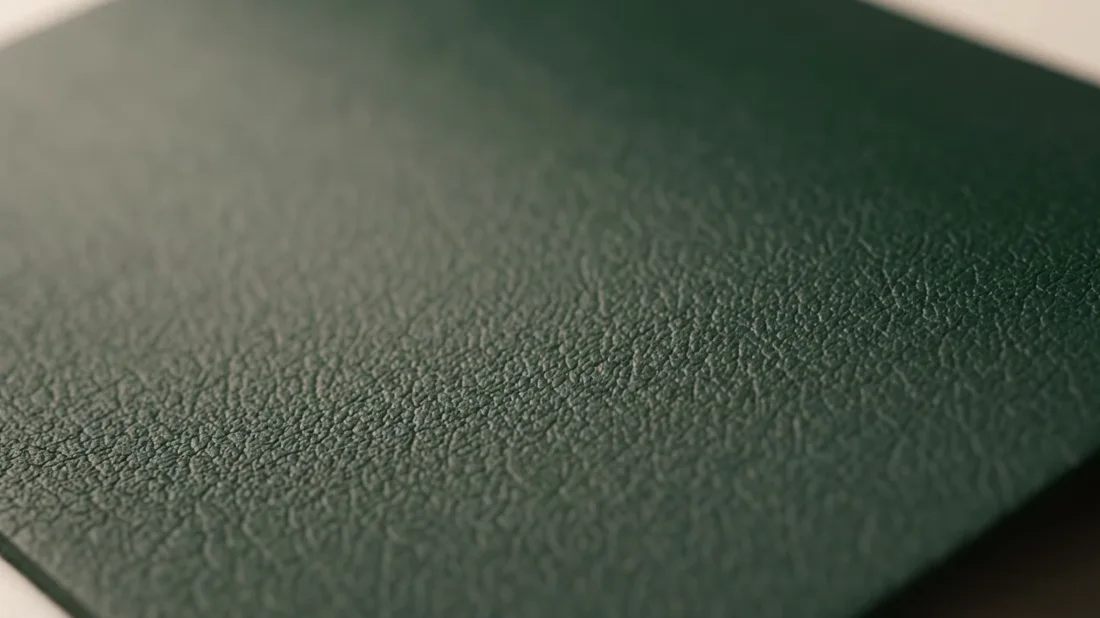
Macro photograph of the natural cork surface, showing its granular structureMacro photograph of the natural rubber base, showing its fine matte texture

Natural cork · The surface

01

Material

Bark harvested from the cork oak, which regrows its bark and is not felled to be harvested.

02

Purpose

To give the practitioner a surface that is warm underfoot, firm to the touch, and made from a renewable natural material.

03

Performance

Chosen for dry and damp surface grip. Figures will follow validation.

04

Validation

Supplier batch QC covers dry and damp surface grip, material consistency and flatness.

05

Care

Wipe with a damp cloth and dry flat, away from direct sunlight.

Natural rubber · The base

01

Material

Natural rubber, tapped from the tree rather than synthesised from petrochemicals.

02

Purpose

To hold position on the floor and to carry the cushioning the cork surface sits on.

03

Performance

Chosen for floor stability and for the resilience of the base under repeated use.

04

Validation

Supplier batch QC covers floor stability, layer bonding and dimensional accuracy.

05

Care

Store rolled, not folded. Keep away from prolonged direct sunlight.

Our standard

Five questions every product has to answer.

01

Function

Does it work in the practice it was made for, not in a photograph of one.

02

Safety

Materials a practitioner is in contact with for an hour at a time are chosen accordingly.

03

Sustainability

Natural materials selected deliberately, and described accurately.

04

Durability

Construction judged on how it holds up over repeated use, not on first impression.

05

Design integrity

Every dimension exists for a reason we can explain.

Testing and evidence

Designed to be tested.
Not merely described.

A claim without a measurement behind it is marketing. We would rather show you what is being checked, and publish the numbers when they exist.

Confirmed with our manufacturing partner

Dimensional accuracy
Material consistency
Layer bonding
Dry surface grip
Damp surface grip
Floor stability
Flatness and flexibility

Being pursued independently

NABL accredited laboratory testing

Results will be published here as they are confirmed, and not before. Nothing in the right-hand column is claimed as a result yet.

Transparency

Know your ProMat.

Every ProMat will carry a discreet code on its packaging. Scanning it opens the full account of the mat in your hands: what it is made from, why those materials were chosen, how it was made and checked, and how to care for it at the end of its life as well as the beginning.

What it is made fromWhy these materialsSpecificationsManufacturing and QCApplicable test informationCare and cleaningStorageDisposal guidance

Know Your ProMat

Materials. Making. Care. Evidence.

Scan to explore

Founder

Madhushri Calindi

Founder, Sutra Earth Wellness LLP

A trained yoga practitioner, with a background spanning wellness, naturopathy, operations and business management, including an MBA in Operations and more than fifteen years of corporate and operational experience at senior management level.

Sutra Earth began from a practitioner's question, asked on the mat rather than in a boardroom: why can a wellness product not be functional, thoughtfully engineered and materially responsible at the same time?

Women founded. Practitioner led. Built in Maharashtra, India.

Innovation

ProMat is the first product, not the last.

Sutra Earth is intended to grow into practice accessories, props and further wellness products. What carries across the range is not a material or a category, it is the method: observe the practice, design deliberately, separate intent from evidence, and pursue the evidence before claiming it.

Selected concepts are currently under IP evaluation. Technical details are confidential and are not published here.

Questions

What practitioners ask.

What is ProMat made of?

Two natural materials and nothing else in the working construction: a natural cork surface over a natural rubber base. The finished mat is 5.5 mm thick and 183 × 68 cm.

How does cork feel to practise on?

Cork is firmer and warmer underfoot than foam. It has a fine natural grain you can feel, and it does not have the slick plastic surface of a synthetic mat. Most practitioners who move across to it describe it as more grounded.

Do natural rubber mats have an odour?

Natural rubber has a characteristic smell when new, which reduces with airing and use. We would rather tell you that plainly than pretend a natural material behaves like a synthetic one.

How do I clean and store it?

Wipe the surface with a damp cloth and let it dry flat, away from direct sunlight. Store it rolled rather than folded. Full care guidance will be on the Know Your ProMat page that ships with every mat.

Why not thinner or thicker than 5.5 mm?

Thickness trades cushioning against stability and floor feedback. 5.5 mm is our chosen balance for a practice that includes both held floor postures and standing balance work.

What testing has been done?

Our manufacturing partner runs batch quality control covering dimensional accuracy, material consistency, layer bonding, dry and damp surface grip, floor stability and flatness. Independent laboratory validation is being pursued separately. We will publish figures once they are confirmed, and not before.

When can I buy one?

ProMat is in prototype development and performance validation. Register your interest and we will contact you when the first production run is available.

Be there for the first run.

ProMat is in prototype validation. Leave your email and we will write when the first production mats are available, and when validation results are published.

That email does not look right. Could you check it?